Dack Rambo
Dack Rambo brought an easy confidence to every scene — the kind of actor who could make a character feel lived-in within a minute. Dallas fans know him as Jack Ewing, the cousin who arrived with a smile, a sharp edge, and a knack for complication. Beyond Dallas, he was a familiar face across American television for decades, from prime-time series to daytime soaps.
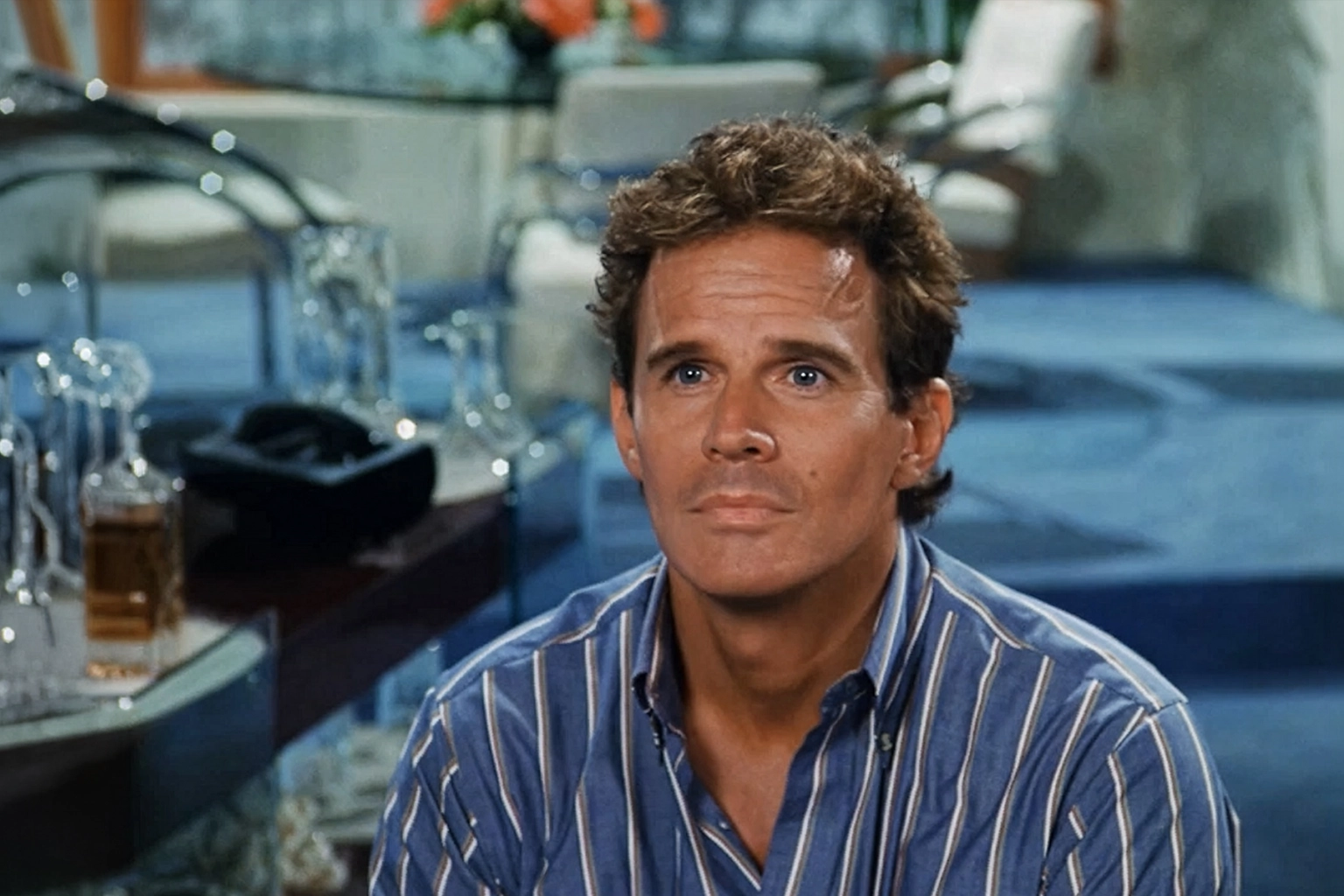
“He had that rare gift of seeming relaxed on camera while still doing very precise work.” — Dallas TV Show Fan Site
Early life: California roots and an early start in television
Born Norman Jay Rambo in Earlimart, California, he built a steady acting life beginning in the early 1960s. Over the years he worked under several name variations, but “Dack Rambo” became the one audiences recognised.
Rambo’s career is a reminder of how television used to be built: hardworking actors moving from guest roles to recurring parts, building trust with directors and producers, then becoming familiar faces viewers welcomed into their living rooms.
Breakthrough roles: westerns, prime-time drama, and a dependable screen presence
One of Rambo’s earliest signature parts was Jeff Sonnett on The Guns of Will Sonnett, where he played Walter Brennan’s grandson. That role helped establish his “everyday believable” quality — part warmth, part grit — which carried across his later work.
Across the 1970s and 1980s, he continued popping up in popular series and TV movies, often bringing an approachable ease that made even small roles feel textured.
Dallas: Jack Ewing — family ties, power games, and soap-era momentum
Rambo joined Dallas as Jack Ewing, a cousin with a legitimate stake in the family business and the confidence to use it. Jack arrives with a friendly face, but he’s never just “nice”: he’s ambitious, emotional, and perfectly willing to steer situations to his advantage.
In story terms, Jack is a useful kind of character for Dallas: he’s close enough to count as family, but outside enough to disrupt the usual loyalties. Rambo plays him with a steady charm that makes Jack’s sharper turns believable rather than cartoonish.
In his own words: chasing Dallas — and what it felt like once he got there
Rambo’s interview comments about joining Dallas are unusually candid. He’s honest about how much he wanted the job — and just as honest about the reality he felt on set once he arrived. Importantly, he also describes how that unhappiness affected his mental health, and why he felt driven to cope in ways he later looked back on with clear-eyed honesty.
“What would you really like to do? … I said, ‘Well, you know what I’d love to do? Growing up on a farm and loving horses.’ … I said, ‘I would love to do Dallas.’ First of all, I was a great fan of Dallas. I love Dallas.” — Dack Rambo (interview excerpt)
“So, I mean, I schemed and clawed, maneuvered, manipulated to get that to get that show. But you know, as they say, be careful of what you wish for, because you’ll more than likely get it. Well, I got it.” — Dack Rambo (interview excerpt)
“It was one of the unhappiest working situations that I’ve ever been in. And, and it remains so to this day… it just was, just an unhappy. It’s just the people didn’t blend very well. And I came in kind of as an outsider, you know… The family had already been established, even though I was a Ewing.” — Dack Rambo (interview excerpt)
“It didn’t take me very long to realize I’d made kind of a mistake… I was full of anxiety going on that set. You know, I just didn’t feel like I really belonged there for some reason. I didn’t feel, they didn’t make me feel particularly welcome. And that’s not crying in my milk. It’s just that, you know, you either do feel that way or you don’t.” — Dack Rambo (interview excerpt)
“So it was during the Dallas days where I started taking prescription drugs because I was full of anxiety going on that set.” — Dack Rambo (interview excerpt)
He then connects that period to a wider loss of enthusiasm for acting and a desire to build something outside the industry.
“So it was during that time I thought, well, what can I do? … So I thought, what can I do? What can I do? And I thought, well, you know, the clothing business had always fascinated me. And I thought, well, if I could be like Calvin Klein.” — Dack Rambo (interview excerpt)
“And I asked to get out of Dallas, by the way, after being there for three years. And finally, they let me go.” — Dack Rambo (interview excerpt)
All My Children & Another World: daytime stardom and long-form character work
Alongside his prime-time work, Rambo became a strong daytime presence: he played Steve Jacobi on All My Children and later Grant Harrison on Another World.
Daytime soap work is a different kind of marathon — long shooting days, a fast pace, and performances that must feel consistent even when stories shift quickly. It suited Rambo’s strengths: clarity, speed, and a grounded, human tone.
Personal life & advocacy: sexuality, privacy, and speaking up when it mattered
It’s important to say this plainly and respectfully: for much of his career, Rambo kept his sexuality private. Later, he spoke openly about being bisexual — and he did so in an era when public conversations about sexuality (especially for working TV actors) often came with real professional risk.
In 1991, he disclosed that he was living with HIV and stepped away from acting soon after. His decision to be public about his status and his sexuality was widely covered at the time — and it helped put a human face on a crisis that still carried heavy stigma.
Final years: courage, candour, and legacy
Dack Rambo died on 21 March 1994 in Delano, California, from complications related to AIDS. (Born 13 November 1941, he was 52.)
His legacy holds two truths at once: he was a solid, watchable actor who earned his place in American television — and he also became, in a difficult moment, someone willing to tell the truth publicly when many people felt they couldn’t.
Full credits list (film, television and stage)
The screen credits below are compiled from published filmographies.
Television (series)
| Year(s) | Title | Role | Notes |
|---|---|---|---|
| 1962–1963 | The Loretta Young Show | Peter Massey | 26 episodes |
| 1965 | Never Too Young | Tim | 16 episodes |
| 1966 | The Virginian | Wesley Hedges | Guest role |
| 1967 | Iron Horse | Lt. Shelby | Credited as Norman Rambo |
| 1967–1969 | The Guns of Will Sonnett | Jeff Sonnett | 50 episodes |
| 1970–1971 | Gunsmoke | Cyrus Pike | 3 episodes |
| 1974 | Dirty Sally | Cyrus Pike | 13 episodes |
| 1978–1979 | Sword of Justice | Jack Cole | Series lead (limited run) |
| 1984 | Paper Dolls | Wesley Harper | Series regular |
| 1985–1987 | Dallas | Jack Ewing | Recurring/regular run |
| 1990–1991 | Another World | Grant Harrison | Daytime soap |
Film
| Year | Title | Role | Notes |
|---|---|---|---|
| 1970 | Which Way to the Front? | Terry Love | Film |
| 1974 | Nightmare Honeymoon | David Webb | Film |
| 1979 | Blackjack | Jack Cole | Film |
| 1988 | Lonely Knights | Brad Moore | Film |
| 1989 | The Spring | Andy | Film |
| 1990 | River of Diamonds | John Tregard | Film |
| 1992 | Ultra Warrior | Kenner | Film |
TV movies / specials (selected)
| Year | Title | Role | Notes |
|---|---|---|---|
| 1974 | Hit Lady | Doug Reynolds | TV movie |
Dack Rambo FAQ
Who did Dack Rambo play on Dallas?
He played Jack Ewing, a cousin of the Ewing family.
What else is he known for?
He’s also widely known for Jeff Sonnett on The Guns of Will Sonnett and roles on All My Children and Another World.
Did he speak publicly about his sexuality and HIV status?
Yes. In 1991 he publicly disclosed living with HIV and later spoke openly about being bisexual.
When did Dack Rambo die?
He died on 21 March 1994 from complications related to AIDS.