Southfork Ranch
The story of the land, the Southworth legacy, the Ewing family, and the oil buried beneath Southfork.
History of Southfork
In 1841, Tennessee lawyer John Neely Bryan built a pole hut on the east bank of the Trinity River and named it Dallas. Pioneers started straggling in in the 1840s, sharing Bryan's vision of a great port for steamboats coming up the river from the Gulf of Mexico. By the 1850s, a new group of settlers had arrived—largely French, Belgian, German, Swiss, and Polish—whose skilled artisans and unusually high number of intellectuals promoted the cultural development of the envisioned city. But a man with a different dream, Enoch Southworth, steered clear of Dallas and bought up thousands of acres roughly thirty-five miles to the north.
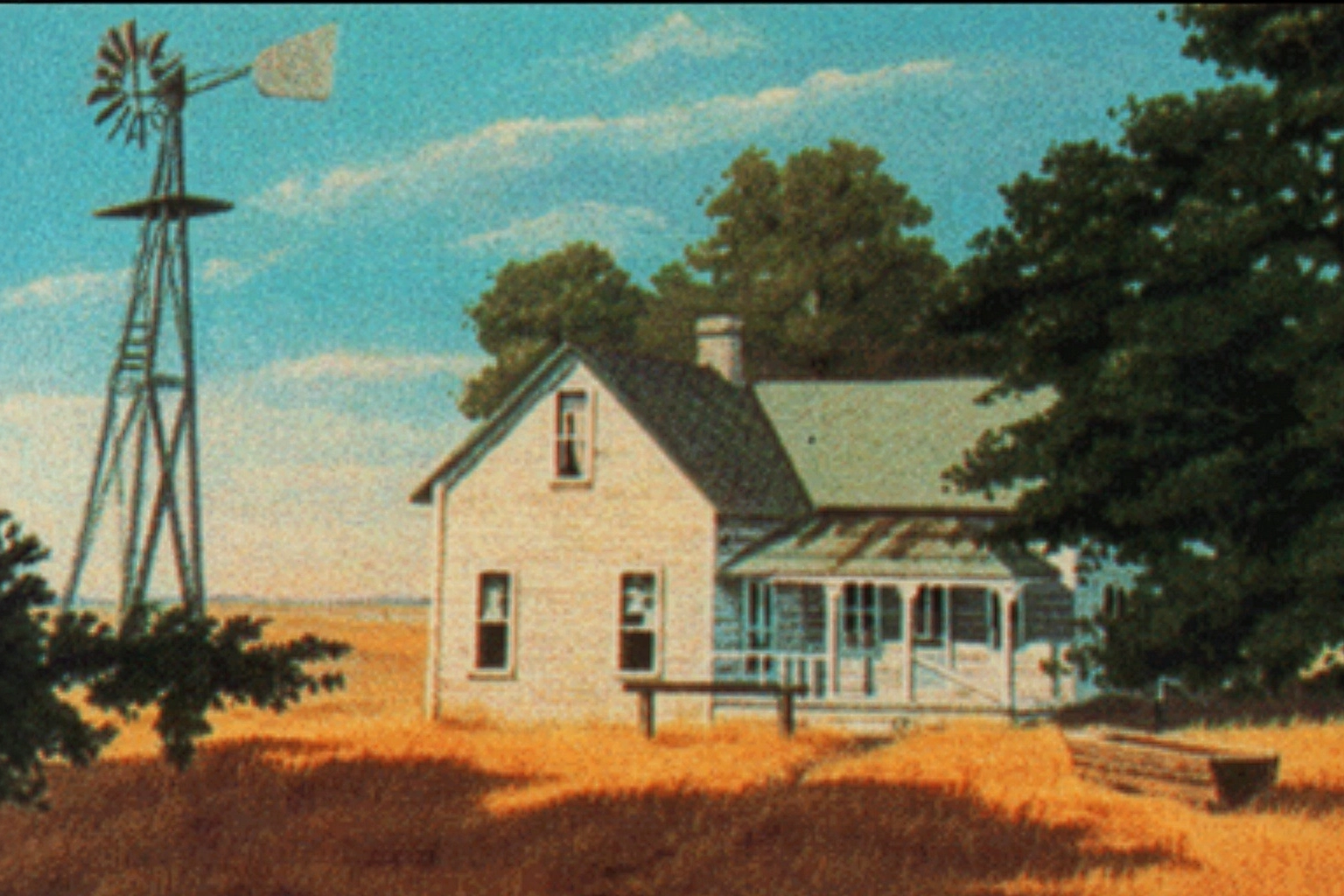
Southworth was a man in love with the earth, its textures, its gifts of sustenance to the grasses, the animals, himself. He had carefully chosen this site for his ranch. He had grown up hearing of Bryan's boasts of Dallas as a major boat terminal, and in 1858 he shook his head in bafflement as he studied the shallowness and unpredictable nature of the Trinity River, knowing full well that it could never handle boats. No, Southworth thought, that water was not meant for shipping, it was meant for the regeneration of life.
He garnered one hundred thousand acres—all of which is still intact today—the choice sections bountiful with water from a stream which divides at one point—hence the name Southfork—small ponds, and several underground springs. Other sections, each equivalent to 642 acres, like Two Stick pasture and Little Horn Country, were plentiful in the grasses and low-to-the-ground vegetation needed to support cattle and horses. And then there was an area that bore little of anything, except rattlers, which the deed called Section 40. But it was land, and Southworth bought it along with the rest. The soil on Section 40 was heavy with salt, rather than the limestone that permeated the rest of the area, but he thought that perhaps one day he could somehow channel water there and bring the land back to life.
On the whole, Southworth's dream was realized in Southfork as the most splendid place in which to start his cattle empire. There was indeed a heavenly quality to this land: the mild temperatures, the brilliant blue skies and gentle breezes, the rolling magnificence of the prairie grasses, wildflowers of all kinds, and the clusters of mesquite, pecan, hickory, cottonwood, and live oak trees. Enoch himself felled some of the trees and began work on the main house, where he planned to bring a new bride and begin work on a family of his own.
By the fall of 1860, Southfork Ranch was well on its way as the leader of the territory. The first thousand head of Southworth Texas longhorns were driven north to market on the new Chisholm Trail and several hundred head of horses were rounded up by Southworth's small army of cowboys. But then, on February 1, 1861, Texas joined the Confederacy, and Southworth had no choice but to send himself and his "army" off to war.
When he returned to Southfork in 1865, he was faced with rebuilding almost everything. In his absence, fences had fallen, and his horses had been appropriated by the Army. But he set to his work with a vengeance, and by 1870 the ranch was resurrected in even greater glory. He then married, and his wife bore him a son, Aaron. In celebration, Enoch moved his family into the finally completed white clapboard house and began the tradition that is honored to this day: the Annual Barbecue.
Aaron, Enoch's sole child and heir, was every bit the man his father was, and more. His respect for the land was without condition, his way with animals extraordinary, and even as a young man his leadership abilities and fairness with the hands were the talk of cowboys throughout the territory. He was bright, strong, charismatic, and vital, and also gentle and kind, though on occasion he tried to hide those qualities.
Southfork was prospering along with Dallas, the growth of the latter not particularly delighting Enoch, since it was apparent that Dallas's future was attracting a level of sophistication that wasn't necessarily in the best interests of the ranching way of life. Dallas was now the intersection of the northbound Houston & Texas Central Railroad with the westbound Texas and Pacific, which was good for the local economy, but the new wave of eager settlers chugging into the area were not of Enoch's liking. That was when he purchased miles of barbed wire from Betcha-a-million Gates (John W., the barbed-wire king who had been pestering Enoch for years) and ordered high fences to be erected. "Not to keep the cattle in, Son, to keep those crazy Eastern folks out."
Young Aaron's acceptance of new ranching ideas, integrating them compatibly with the old ways, brought even greater prosperity to Southfork. In the late 1880s, when the cattle trails to markets were more easily traveled, when the trains were more efficiently shipping beef to the north and east, he was responsible for Southfork's being one of the first ranches to raise less-tough, fatter cattle and slowly diminish their number of longhorns. "Daddy," he explained, "for every one of 'em with those eight-feet horns, I can git three Herefords on the boxcar." More revenues poured into the Southfork chest.
With their expanding funds, Aaron supervised the building of the best bunkhouses in the county for the loyal Southfork hands. New pens, barns and corrals were also built, and more cattle and horses moved across the land.
Aaron began experimenting with open irrigation, with moderate success. Perhaps his most important contribution, however, at least in terms of the ranching community, was his cooperative effort with other ranchers to finance, launch, and support the Fort Worth Stockyards Exchange in the late 1890s—a move that put "Cowtown" on the map as the third largest exchange and meatpacking center in the United States.
Like his father, Aaron kept a wary eye on the ever-expanding Dallas. He didn't quite understand that city, what the people were doing there. Of the new arrivals he said, "Hellfire if I kin figure out why they come all this way just to live like they did back East." He felt the future lay in Fort Worth, where ranchers and cowboys could meet and talk and share ideas—feel like neighbors, like a community, like men who were born to be a part of the range and part of each other through their common bond. And, better yet, it was a place to hoot and holler and wheel and deal and parade their best livestock, to boast of their successes and advise one another in times of trouble.
On January 11, 1901, a very tired, elderly Enoch Southworth rode back to Southfork from Dallas. He tied up his horse, trudged up the stairs of the ranch, and summoned his son. Slowly, with a seriousness Aaron had never seen, he told his son the news. The day before, in Beaumont, Patillo Higgins and Anthony Lucas's well, the Lucas #1, had hit a gusher and raw crude was spewing up from the ground by the thousands of barrels. "I know that land," he said glumly, "and if there's oil there, then, God almighty, the entire state's comin' in it." He paused. "They're carryin' on in Dallas about Black Gold, Jr. What it is, is poison. It kills every living thing that it covers."
And right then and there, Enoch made his son pledge that he would never, ever let anyone drill for oil on Southfork Ranch. His son took the pledge and Enoch nodded, satisfied. A few days later, he passed away.
The Ewing Era
Aaron married and had two children, the eldest a boy, Garrison, and then a little girl, Eleanor. Aaron was one of the most respected and powerful men in Texas and the children grew up in awe of him. Garrison, however, came to fear his daddy because, as he hit his teenage years, it was apparent by some freak accident of nature, Garrison was not cut out for the ranching way of life. But Aaron was not unkind to him, he just basically ignored him.
After—to his utter joy—he found out that it was his daughter, Ellie, who had inherited every bit of the Southworth spirit.
For Ellie it was a magical place to grow up in, a peaceful place that also held many moments of exquisite excitement: calving time, the roundups, the rodeos, the auctions in Fort Worth. Southfork cattle were commanding some of the highest prices in the state, bulls and new breeds won prizes every year at the State Fair in Dallas, and money, well, it was just there, lots of it.
But then it all started to change. Oil—Big Oil—began its encroachment on all of Texas, bringing a wave of grimly determined men in search of it, the wildcatters. The state was reeling, drunk with new dollars from the new industry. Ellie watched her father speak out in Dallas, and then in Austin, bellowing, pleading with his fellow Texans to protect the ranchlands from this insane invasion. But who listened, who cared? Oil meant big money, much bigger than the ranching community could ever dream of.
And then, for Aaron, everything his father and he had worked for started coming apart. In 1929, following the stock market crash, the country slumped into depression and the money that was once so plentiful at Southfork began to dry up. Cattle prices plummeted to next to nothing and Garrison and Eleanor watched their father's face grow lean and more tense.
Oil. Oil. Oil—the only word that meant survival in the listless, dangling economy. Ranch hands, shrugging helplessly to Aaron, deserted Southfork to earn wages in the oil fields. Derricks were bursting onto the horizon, moving closer and closer to the region, as Southfork continued its sickening slide into decay. The year 1930 brought one of the most devastating droughts in Texas history, and it was plain to all that Southfork was dying. The stream was barely a trickle, the ponds just gaping holes in the ground. The fields and ranges were burned out, cattle carcasses rotting in the sun. Day after day Aaron rode back from Fort Worth with hardly any money as he sold what was left of his bulls and horses. As Garrison remembered years later, "He'd bark orders in that tough, leathery voice of his like Southfork was the most grand ranch on earth, but his voice had an edge of fear."
It was a gut-wrenching day when the Sheriff of Dallas County up and knocked on the once beautiful main house, now in sad disrepair. Southfork was bankrupt, finished. The Sheriff was there to foreclose and evict the Southworths from the land. Garrison was too horrified by the scene to bear it, and he ran away. Aaron barely noticed or cared in his anguish.
And then, bursting through the door, came young Ellie, pulling in behind her a very tall, ruggedly handsome man. Glancing at the Sheriff, Ellie told her daddy that the man's name was Jock Ewing and that she was marrying him. Jock spoke up, telling Aaron that he would save the ranch. Aaron was thunderstruck. His eyes first lit up with hope, then narrowed in suspicion. Yep. Jock Ewing was a wildcatter. Big Oil in the making. Ellie smoothed things over, talking sense to her daddy and her fiancé. The ranch was saved and Ellie was married to the maverick oilman. Things went along smoothly as Jock poured thousands of dollars into the revitalization of Southfork. Smoothly, that is, until he thought he should get something back on his investment and did some testing on the salty Section 40 and, to his delight, located the only oil reserve in all of Dallas County. Right there on Southfork. Without Aaron's knowledge, Jock moved in drilling equipment. When he made a strike, Jock proudly showed Aaron how Southfork was able to finance itself.
Local lore has it that the ensuing fight between Aaron and Jock over those wells caused the clapboard house to collapse from the sheer volume of it. (Jock built the new main house that presides over Southfork today.) In the end Jock decided he needed Miss Ellie—who was as appalled as her father—more than he needed that oil, and he capped the wells.
When Aaron Southworth died, he bequeathed Southfork to Ellie Southworth Ewing and to the Ewing family, on the provision that they would maintain it as a working ranch and, as his father had instructed, that no one ever drill for oil. The family has mostly respected that provision to this day. In 2001 Miss Ellie passed away at Southfork Ranch, leaving the house and the land in the hands of her son Bobby Ewing.
The Oil Beneath Southfork
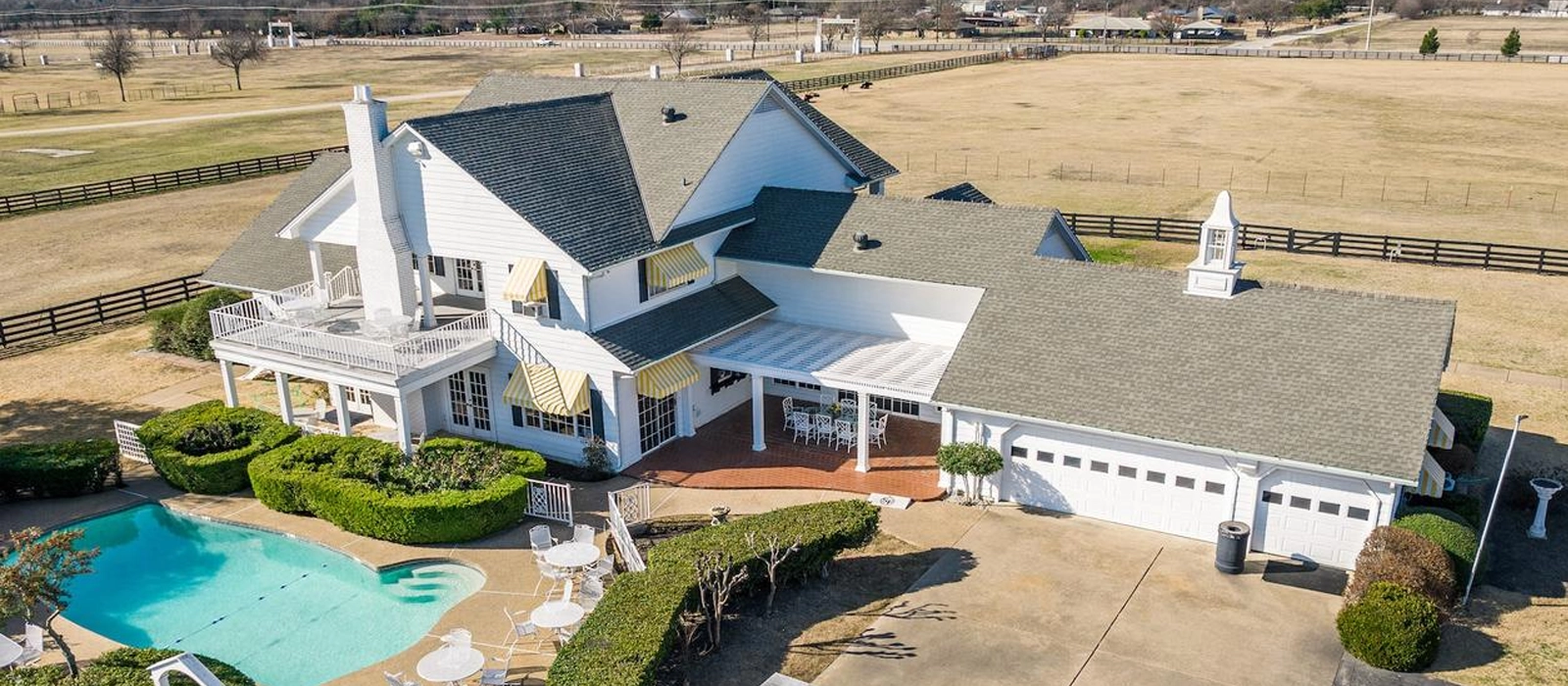
In the early 2010s, the great house at Southfork Ranch still stood proud over the wide Texas pastures, just as it had for decades. Horses ran across the fields, the wind moved through the tall grass, and the land looked peaceful. To outsiders it seemed that the storms that once defined the Ewing family had finally passed.
But deep beneath Southfork, something enormous had been waiting.
For years the ranch had been protected from oil drilling. Long ago Miss Ellie Ewing, the matriarch of the family, had made a simple but powerful request: Southfork should remain a home, not another oil field. Her son Bobby Ewing honored that promise faithfully. To him, the land was sacred—family land that represented generations of memories rather than barrels of crude.
Yet to another Ewing, the land meant something else entirely.
John Ross Ewing III, the ambitious son of the legendary oil baron J.R. Ewing, believed Southfork was sitting on a fortune. Geological studies and seismic readings suggested that far below the ranch lay a massive reservoir of oil—perhaps billions of barrels waiting to be tapped.
To John Ross, the discovery felt like destiny.
The Ewings had built their empire on oil. His father had dominated Dallas through oil deals and ruthless ambition. Letting the largest reserve they had ever found sit untouched beneath Southfork seemed unthinkable. To him, the ranch wasn’t just family land—it was the key to restoring the Ewing oil empire.
But Bobby would never allow drilling.
When the truth about the oil beneath Southfork emerged, it ignited a bitter family conflict. Bobby refused to break the promise he had made to Miss Ellie. He believed that once the first well was drilled, the land would change forever. Southfork would become another industrial oil field instead of the peaceful ranch she had fought to preserve.
John Ross saw things very differently. To him, Bobby’s refusal was throwing away the greatest oil discovery the family had ever seen. The argument became a battle of values: legacy versus loyalty, ambition versus memory.
Determined to prove he was right, John Ross pushed forward. Quietly and secretly, drilling equipment was brought onto the land under cover of darkness. A rig began to dig deep into the Texas earth beneath Southfork Ranch.
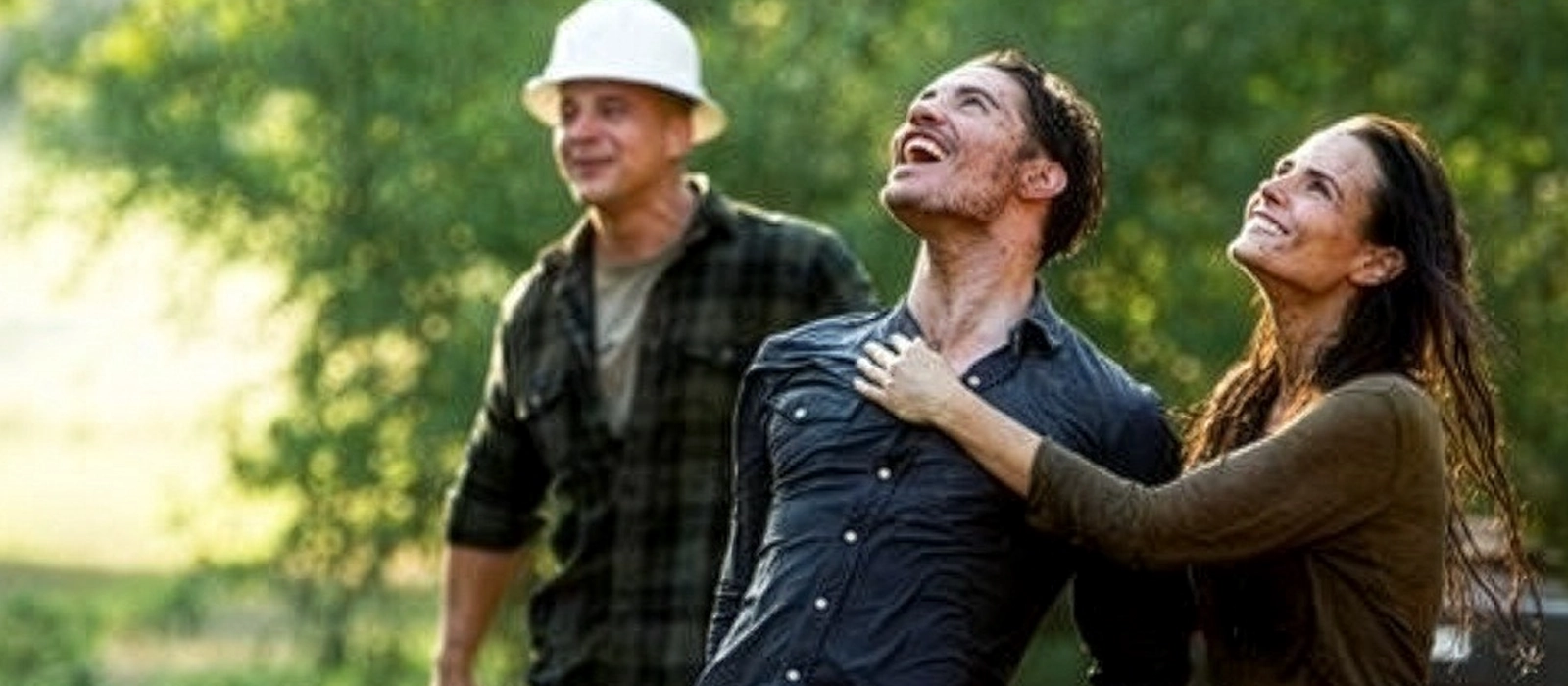
For days the drill pushed downward through ancient layers of rock. Then the moment finally came.
The drill struck oil.
From deep beneath Southfork, crude oil surged upward, confirming what John Ross had believed all along: the ranch was sitting on a massive reservoir of black gold.
For him it was triumph. For Bobby it was betrayal.
The discovery triggered fierce disputes over land rights, ownership, and control of the ranch. Business schemes, legal maneuvering, and family tensions swirled around one central question: should the Ewings exploit the oil beneath Southfork or leave it buried forever?
In the end, Bobby stood firm.
Despite the enormous wealth hidden beneath the ranch, Southfork itself was never transformed into a sprawling oil field. Bobby refused to allow the land to become another place covered in rigs and pipelines. The promise made to Miss Ellie mattered more than the fortune waiting underground.
And so the oil remained where it had always been—deep beneath the rolling pastures of Southfork Ranch.
For John Ross, it was a lost empire that should have been built.
For Bobby, it was proof that the heart of Southfork was worth more than any oil fortune.
The land stayed as it had always been: a home for the Ewing family, standing quietly above one of the greatest untapped oil reserves in Texas.