Timothy Patrick Murphy Interview
A rare 1980s Q&A with the actor who played Mickey Trotter — candid about Dallas, ambition, and the realities of working in television
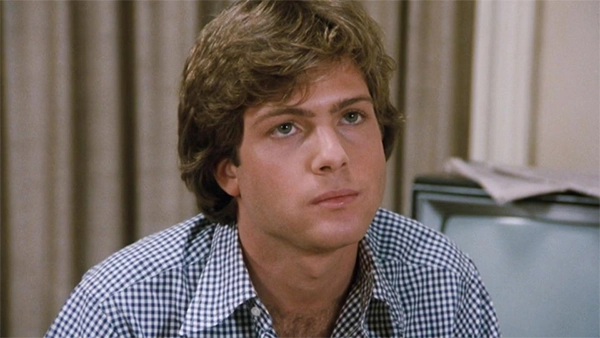
“It’s one of the few characters that is not a black-and-white character… Depending on who he’s dealing with, it’s a completely different person.” — Timothy Patrick Murphy
Timothy Patrick Murphy interview summary
Timothy Patrick Murphy later passed away at a very young age, which makes this snapshot of his voice and perspective especially poignant for fans.
Intro
At the height of Dallas, a new cast member didn’t just “join a show” — they stepped into a global phenomenon with an audience fiercely attached to the familiar faces of Southfork and Ewing Oil. This 1980s interview captures Timothy Patrick Murphy at just 19, speaking with surprising candour about what it takes to break into a long-running hit: patience, professionalism, and the ability to find your lane inside a massive ensemble.
Murphy talks about Mickey Trotter as a modern-day opportunist with a J.R.-like streak — quick, dry, and always testing the boundaries — but also a character who slowly reveals something human underneath the swagger. He describes the careful way Dallas “eased” him into storylines, the contrast between primetime pacing and daytime-soap pressure, and the on-set atmosphere shaped by veterans like Larry Hagman and Patrick Duffy. There are laughs (including a first-day motorcycle mishap), but also the working-actor truths: unemployment lines, scripts appearing on the doorstep, and a deliberate choice to keep finances managed by family so the work stays the main focus.
Timothy Patrick Murphy passed away at a very young age, and that reality adds weight to this conversation: it’s a rare, unguarded record of his humour, ambition, and clear-eyed view of the business — preserved here for Dallas fans who still remember Mickey Trotter’s impact.
Interview
INTERVIEWER: I wanted to ask you — I caught a Dallas the other day, and you weren’t on it.
TIMOTHY: There’s one episode I wasn’t on. I am not on three of them this season, and you caught one of the three.
INTERVIEWER: What surprised me is they didn’t even have you on the credits.
TIMOTHY: No. I came on with one other cast member this year — I came on with Lois Chiles — and there’s 17 regulars on the show. So they wanted to put us to the test the first year and just see who they can bump up to the beginning. Because right now I’m at the end. It says, “And Timothy Patrick Murphy as Mickey Trotter.” And it’s like — well, everybody’s out eating popcorn.
INTERVIEWER: Switching to another channel — but that will change next year. There’s no doubt you’re going to be on next year. And you are supposedly the young JR… what is the…?
TIMOTHY: The character’s gone through a lot. They brought him on as very much an opportunist — no respect for authority whatsoever. So he’s got the same kind of dry sense of humor that JR has. So when those two are in scenes together, it’s like, “Can you top this?”
TIMOTHY: But slowly but surely — once upon meeting the character that Charlene Tilton plays — he sort of comes around a little bit, and there’s human emotion seen for the first time in this character. And that struggles within him, because he’s so busy being cool all the time that he’s not used to feeling something.
TIMOTHY: So it’s a wide range of things they’re doing with this character. We’ve got two more episodes left to film. And the change has been incredible from the beginning when I started.
INTERVIEWER: We’ll talk about that.
TIMOTHY: It really explored all aspects with different characters, so they’ve established relationships so that the audience recognizes how he reacts to different characters.
TIMOTHY: And the good thing about this character for me and for the show is that it’s one of the few characters that is not a black-and-white character — it’s not a good guy, a bad guy. Depending on who he’s dealing with on the show, it’s a completely different person. Three-dimensional, which is very difficult and unusual to find.
INTERVIEWER: What is your relationship to JR on this thing?
TIMOTHY: Well, I’m his brother’s cousin. I’m Ray Krebbs’ cousin.
INTERVIEWER: I can’t even keep track… Brother’s cousin… da-da-da…
TIMOTHY: His half-brother’s cousin.
INTERVIEWER: So you don’t get it too straight, too. Half-brother’s cousin.
TIMOTHY: His half-brother is Ray. Ray Krebbs. He’s played by Steve Kanaly. It doesn’t make me — it’s not incestuous.
INTERVIEWER: Just barely. So who are you supposed to be involved with — some woman? Charlene Tilton? You’re going to get it.
TIMOTHY: I get the girl.
INTERVIEWER: What do you think is going to happen between you and her?
TIMOTHY: Well, I can’t say what’s happening right now, because there is a major storyline that happens at the end of the season.
INTERVIEWER: Well, this is coming out in May.
TIMOTHY: Okay, well, then it will have been on the air already. I mean, it’s sort of cat-and-mouse.
INTERVIEWER: So it will be carried on next year?
TIMOTHY: Yeah. Nobody’s sure what’s going to happen yet.
INTERVIEWER: Do you think it’s possible you’ll marry her or anything like that?
TIMOTHY: Oh, I think they’re just leaving everything out there. What would I like to see happen? I’d like to see myself married to her after about 15 years on the show. (laughs)
TIMOTHY: No — it’s better if you’re single and play the field and all that. You never know with that kind of a show. I can never guess. I find out things about the script as they arrive on my doorstep — literally sitting on my doorstep when I come home.
INTERVIEWER: You don’t have that much really to do on this show.
TIMOTHY: It depends on the episode. They’re really bringing me into the mainstream of things — which I’m really enthralled by — because I did a daytime soap for two years and I know what’s important in a soap-opera type story: once you’re eased into the main storyline, then you’re pretty set.
TIMOTHY: They’ve been very careful the whole year about not just bringing me on gangbusters so that the audience… You can’t do that with a successful show. You can’t bring on somebody out of the blue and he’s on all the time — because the audience is so comfortable with the characters they see.
TIMOTHY: So each episode that I’ve been on, they’ve written a little more with someone else so that the audience knows this character is really there to stay. It’s been a year of basically easing me into the whole family thing.
INTERVIEWER: There were 28 shows?
TIMOTHY: Yeah.
INTERVIEWER: How many will you have been on?
TIMOTHY: All but three.
INTERVIEWER: That’s terrific.
TIMOTHY: Yeah. My accountant thinks so. The unemployment office thinks so.
INTERVIEWER: What were you doing just before you got there?
TIMOTHY: I was standing on the unemployment line.
INTERVIEWER: Really? How long were you unemployed?
TIMOTHY: Well, on and off. I left Search for Tomorrow by choice. I signed on a two-year contract, finished my two years, and was offered three more. It was lucrative and secure.
TIMOTHY: I was living in New York. I have an apartment there — I could pay the rent, I could see as many plays as I wanted to. I live around 72nd on the West Side.
INTERVIEWER: Not bad for 19. Living next door to the Dakota. You live next door to the Dakota?
TIMOTHY: Yeah — I managed to hold onto the apartment. When I first left the soap there was a six-month period between leaving Search for Tomorrow and getting Dallas — I sublet it then. Now, because of this show, I go back and forth a lot. I’ve been known to go back for three or four days. My family’s back there — New Jersey and Connecticut — so I’m there all the time. It’s a cheap fare, and no hotel bills because I’ve got the apartment.
INTERVIEWER: How did you get this role?
TIMOTHY: Lorimar hasn’t had too many executive changes in casting in a long time. Three-and-a-half years ago I tested for a series pilot called Secrets of Midland Heights. Another actor got the role, but it came down to the two of us, and we went to the network — that’s the worst feeling, standing in front of a network to get approved.
TIMOTHY: I walked away from that and decided to go back to New York to study. I ended up on Search for Tomorrow.
TIMOTHY: Lorimar remembered me — so when this character came up for Dallas, they called my agent and gave the background: a 23-year-old rebel. Up to that point I’d been playing very nice people, so my agent and I both said, “You’re not really right for this part, but go in.” I met with them twice. I didn’t need network approval again because I’d worked so long.
INTERVIEWER: They didn’t even ask for anyone else?
TIMOTHY: They wanted to take a good look at me again — and that was it.
INTERVIEWER: How did you feel?
TIMOTHY: Incredible. They called me up — I’d forgotten all about it because I was testing for other shows. I try to forget about things because you go crazy otherwise. You get depressed when it almost happens and then the rug gets pulled out.
TIMOTHY: When they called, I thought, “Okay, what did I do?” Because I went in with a definite way of playing the role, and it could have been off base. I jumped on a plane the next day and went to New York because it was out of my hands.
TIMOTHY: Then it was about two-and-a-half weeks negotiating — them playing games like, “We have another person in mind…” and I told them to call me when it was all over.
INTERVIEWER: When your agent signs the Dallas contract, do they tell you what’s going to happen to the character?
TIMOTHY: Depending on the show. With Dallas, it has a good enough reputation that they’re not going to spend the money and leave you around. Too much money at stake. This show doesn’t need filler — it could survive with three characters.
TIMOTHY: There’s no understanding — you take your chances. In this business, if you really believe…
[Transcript ends mid-sentence in the source you provided.]