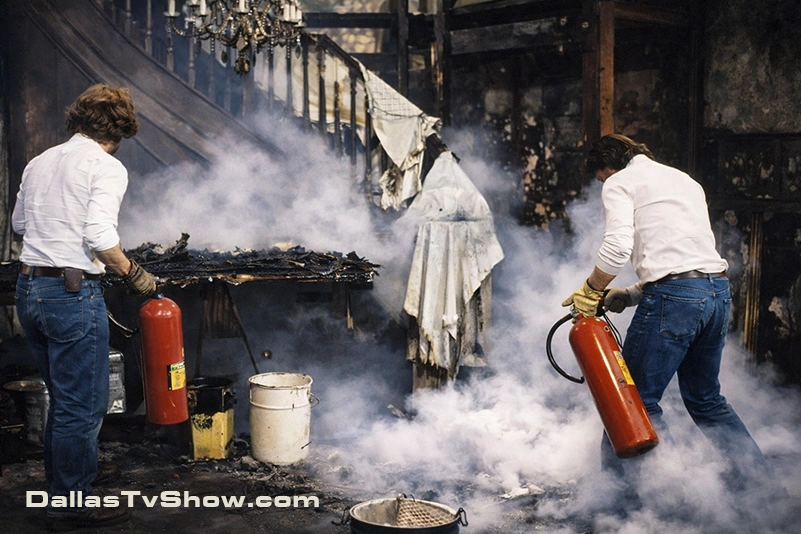
The Set & Sound Stage
Much of Dallas was built for speed and continuity: standing sets that could be revisited repeatedly, and studio “exteriors” that could be lit and recorded like locations. Soundstages made it possible to control light, sound, and schedule while keeping the show’s world consistent from episode to episode.
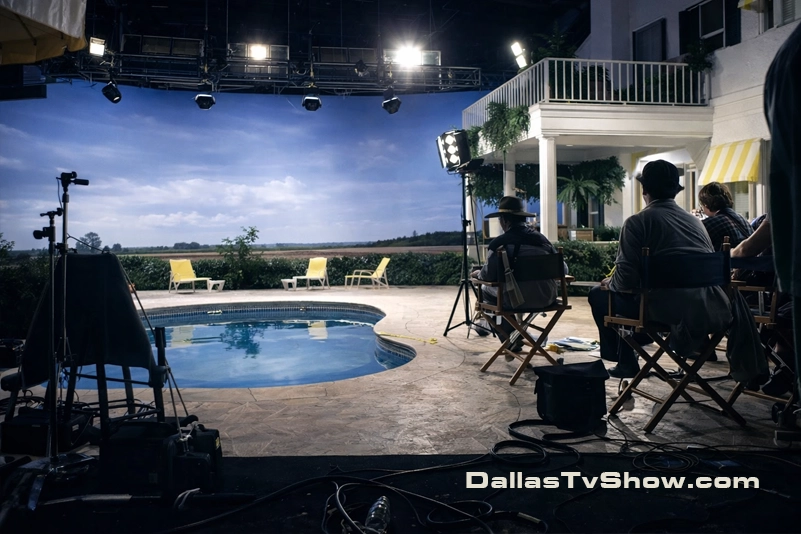
“The daily call sheet told the actors which stage to report to and even scheduled in the amount of time needed to set up the move from one stage to another.” — Production logistics on stage
Southfork Outside (Without Leaving the Lot)
A studio-built Southfork “outdoor” environment made it possible to stage exterior scenes with controlled lighting, controlled sound, and repeatable continuity. It also allowed the production to return to the ranch backyard and pool whenever the story needed it, without losing time to travel or unpredictable weather.
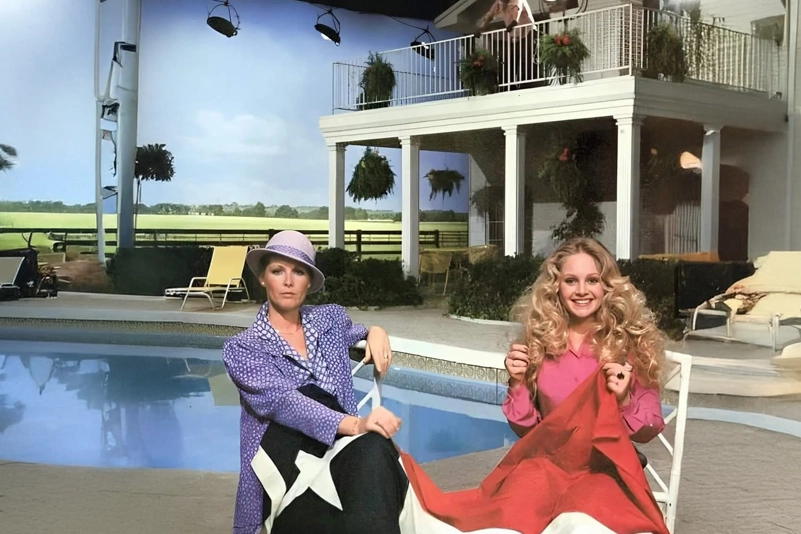
Technical Craft: Why the Sets Worked
Soundstages were not just empty rooms with walls—they were workspaces designed around lighting access, camera movement, sound control, and fast resets. The same space could hold multiple standing sets, while nearby storage and prop resources made it possible to build “new” rooms quickly from flats and redressed pieces.
Stage-friendly details that mattered
- Lighting access: catwalks and overhead rigging made relights faster and safer above standing sets.
- Sound control: quieter environments reduced interruptions and kept dialogue clean.
- Continuity: standing sets kept furniture placement, wall dressing, and practical lamps consistent.
- Coverage planning: sets were arranged to allow singles, two-shots, and reaction angles without “breaking” the room.
On Set
The crew arrived on set punctually, and the assistant director wrote down their arrival time—to the second. Actors reported to early calls precisely on time, and to later calls with a little more flexibility because work was always slightly behind schedule. Actors were drilled from early in their careers to never be late, so they often arrived early, preferring to spend extra time in their dressing rooms making phone calls or conversing on stage. Curiously, actors often paired off socially in small groups connected by the relationships of their characters. Thus Susan Howard and Steve Kanaly spent time together, as did Dack Rambo and Priscilla Presley. They might “run lines,” chat, discuss their characters, or work out ways of playing certain scenes.
The Core Stages
The ensemble rotated around a working core of four soundstages—Stage 18 and Stage 19, which were connected by a back path; Stage 23, which housed the outdoor set of Southfork, replete with swimming pool (about 3 feet deep and built to 7/8 scale of the real thing); and Stage 5, where the Oil Baron’s Club stood. The daily call sheet told the actors which stage to report to and even scheduled in the amount of time needed to set up the move from one stage to another.
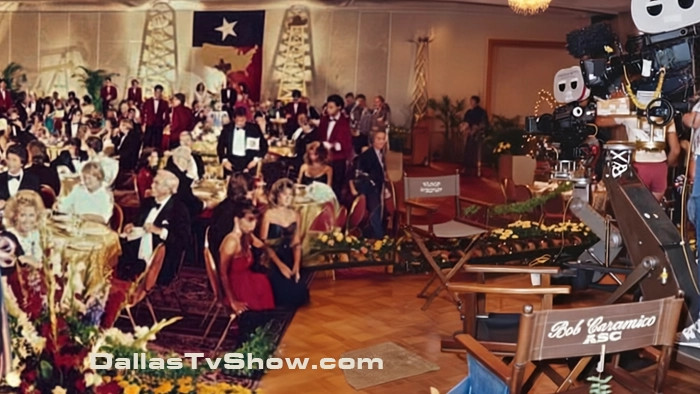
Inside a Typical Soundstage
The typical soundstage was fifty feet high and seventy feet long. Aloft were two sets of catwalks for lighting technicians. Each warehouse-sized, corrugated tin and stucco building housed four or five permanent sets, as well as numerous flats that could become various rooms as needed. The essential design of the rooms of Southfork were replicas of the real homes originally used for the interior shooting. Over the years, some were renovated; the Ewings would naturally redecorate occasionally. The pool furniture, for example, once covered in yellow and white, was later blue and white.
Art Direction and the Look of the Sets
Part of the reason for Dallas’s updated look was that a new art director, Matt Jefferies, joined the crew in 1985. Jefferies insisted on the use of real flowers in room settings and spruced up the natural greenery in all shots. The blossoms on trees and shrubbery on Stage 23 were fake if that flower was not in season, but were otherwise the real thing.
Jefferies was responsible for the color and design of new sets, which were worked out with producers so that they coordinated with characters, right down to the color. Sue Ellen’s office set, on Stage 23, was designed to be blue-gray, whereas the Hancock Park home that was used as her mother’s Dallas home was chosen partly because the living room was peach, and peach seemed to be the perfect color for Patricia Shepard. “But,” said Jefferies, “if someone is really conscious of what color the room is, we’re doing something wrong. The rooms have to work, and be elegant, but it should be the actors who hold the viewer’s attention—not the rooms.”
Dressing the Set: Props, Greenery, and “Apple Boxes”
It could take several days to arrange the props or “dress” a set or to set up an “exterior” shot at Southfork inside Stage 23. It might take four men two days just to put all the greenery in place, three hours simply to set up a bedroom. Linens were purchased specially, but most furnishings came from the MGM prop house. The height of the furnishings was adjusted with wooden boxes called apple boxes, which came in three sizes: a “full apple,” a “half apple,” and a “quarter apple.” They were chosen according to the proportions of the room and the relative size of the actors. Charlene Tilton, for example, had to be on apple boxes just to be in the same frame as J.R. in close-ups. Coffee tables, flower carts—everything except beds—were balanced on “apples” until the cameraman said the look was right.
Southfork Fire